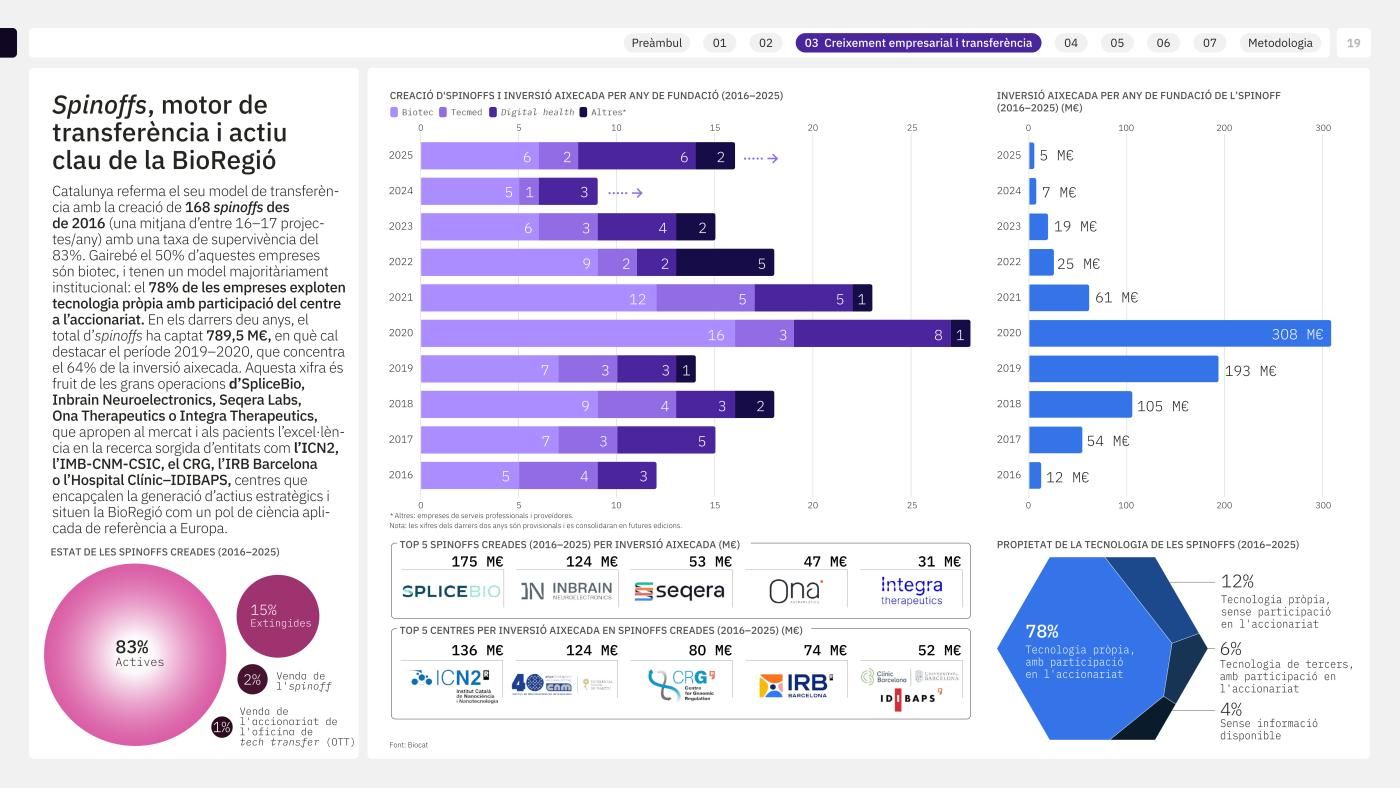
IMB-CNM consolidates its position as the second center in Catalonia for spin-off investment over the past decade
The creation of highly resilient dosimeters for FLASH radiotherapy and the ability to mobilize € 124 million in investment through its spin‑offs reinforces the institute’s leading role in innovation and technology transfer in Catalonia
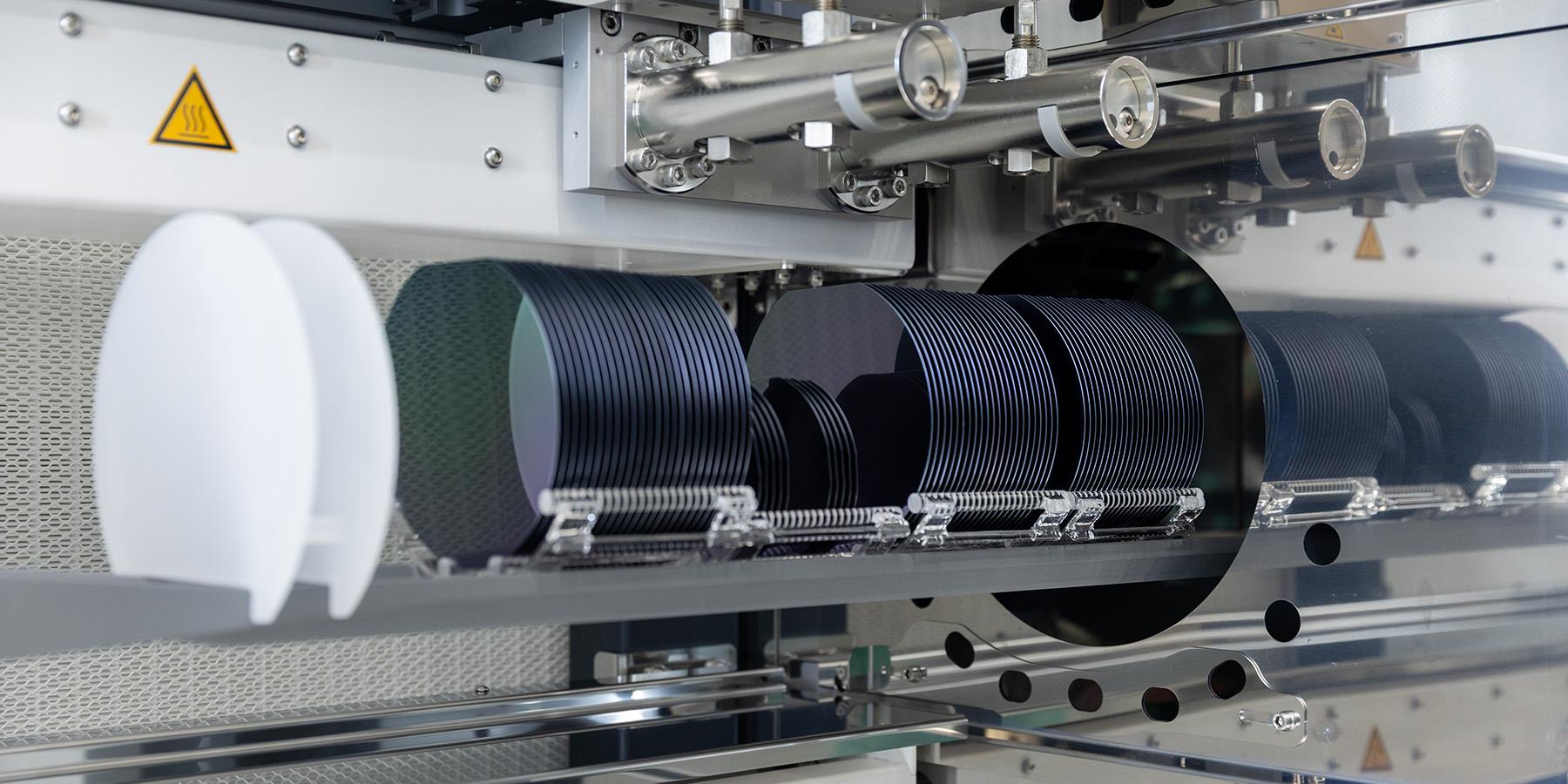
The Institute of Microelectronics of Barcelona (IMB-CNM-CSIC) is the second center in Catalonia for investment raised by spin-offs created in the 2016-2025 period. With 124 million euros, the IMB-CNM leads in research excellence and its transfer to society, contributing to the generation of industrial fabric and solutions for societal challenges. In addition, the cutting-edge research on ultra-resistant radiation dosimeters for FLASH radiotherapy stands out as one of the year's impactful scientific advances.
This information comes from the Bioregion Report 2025, prepared by BioCat and focused on new business models in the life sciences and health sector. The centers in the ranking (page 19) are: the Catalan Institut of Nanoscience and Nanotechnology (ICN2), with 136 million euros; the IMB-CNM; the Centre for Genomic Regulation (CRG), with 80 million; the Institute for Biomedical Research (IRB), with 74 million; and the Institut d'Investigacions Biomèdiques August Pi i Sunyer (IDIBAPS), with 52 million.
The study analyzes Catalonia's capabilities and puts numbers on the trends of the ecosystem: there are 94 research institutions in the field and 1,650 companies dedicated to the sector, 141 of which are spin-offs. It is one of the most dynamic hubs in Europe, growing by 8.3% compared to the previous year and contributing 7.6% of Catalonia's GDP.
Contribution to society
Committed to society's great challenges, IMB-CNM has a long track record in technology transfer, transforming its research into patents, licenses, and spin-offs that generate a real impact. Between 2020 and 2025 alone, IMB-CNM has given rise to five knowledge-based companies: INBRAIN Neuroelectronics, Sweanty, LightNet CarbonCapture (LNCC), FlexiiC, and AiQUOS S.L. The first two are in the field of health. In addition, INBRAIN Neuroelectronics, a spin-off of ICN2 and CSIC, is also the second spin-off in terms of amount of investment raised. In previous periods, other companies created in the sector include A4CELL (Arrays for Cell Nanodevices) and BLB (Barcelona Liver Bioservices), both of which are still operating. BLB, in fact, uses the Micro and Nanofabrication Cleanroom for its products.
All of them are showing very promising results:
- INBRAIN Neuroelectronics continues to revolutionize the paradigm of new neuroelectronic technologies
- Sweanty is changing the sports sector by creating smart patches for continuous athlete monitoring
- AiQUOS S.L. recently won the award for Best Startup at Cerdanyola Empresarial
- FlexiiC is beginning the development of carbon-based flexible chips for sensor monitoring applied to smart systems and the Internet of Things on sustainable substrates
- LightNet Carbon Capture is developing new climate products such as CO2atings® and CO2rallites® from industrial and urban waste in its CSIC COCREA project
Ultra-resistant radiation dosimeters for FLASH radiotherapy
The report also highlights, in the Scientific and clinical advances with a global impact 2025 section (page 16), cutting-edge research from the IMB-CNM on FLASH radiotherapy: They design ultra-resistant radiation dosimeters for use in a new type of advanced radiotherapy, in a research that is unique in Europe. This is a development led by researcher Consuelo Guardiola as part of the DOSIFLASH project, funded by the "la Caixa" Foundation with one million euros. IMB-CNM researchers Celeste Fleta, Iván López and Ángela Henao are also involved; partners include Institut Curie in France, with Sophie Heinrich; Universidade de Santiago de Compostela (USC), with Faustino Gómez; and Centro Nacional de Aceleradores (CNA), with Carmen Jiménez.
The project aims to create the world's first dose monitor to facilitate the implementation in hospitals of a new form of radiotherapy called FLASH, still in the preclinical and clinical trial phase, but considered one of the most innovative in recent years. The device is based on a new microtechnology that is ultra-resistant to extreme radiation, more accurate, and more economical than current alternatives. FLASH radiotherapy consists of applying radiation shots with higher doses than those given in conventional radiotherapy and in fractions of a second. This considerably reduces the potential damage to healthy tissue adjacent to the treated tumor. Preclinical trials are showing that it reduces the likelihood of long-term complications in healthy tissue, one of the main problems with conventional high-dose radiotherapy.
This shows that as a cross-cutting center, the IMB-CNM brings its technologies where society needs them most, from biomedicine and health to the most diverse industrial sectors.